Strong earnings, sticky inflation: what investors learn
Published: Jun 10, 2026
• Updated: Jun 11, 2026
By Ed Robinson, Co-Founder & Co-CEO, Stash · FINRA Series 7 & 63 · Graduate Diploma in Financial Planning · Last updated June 10, 2026
27.1% was the blended year-over-year earnings growth rate for S&P 500 companies that had reported by May 1, according to FactSet. At the same time, U.S. headline inflation rose 3.8% over the 12 months ending April 2026, per the Bureau of Labor Statistics.
That is the kind of market setup that can make your phone feel confusing. One headline says companies are doing great. Another says inflation is sticky and rate cuts may be delayed. If you are searching for The Stash Way: Invest Regularly, you are already doing the right work: trying to separate signal from noise.
This moment is not about predicting the next market move. It is about learning why markets often price in competing facts at the same time. For more background, it can help to understand What is a bull market? and What Is a Roth IRA?.
What happened
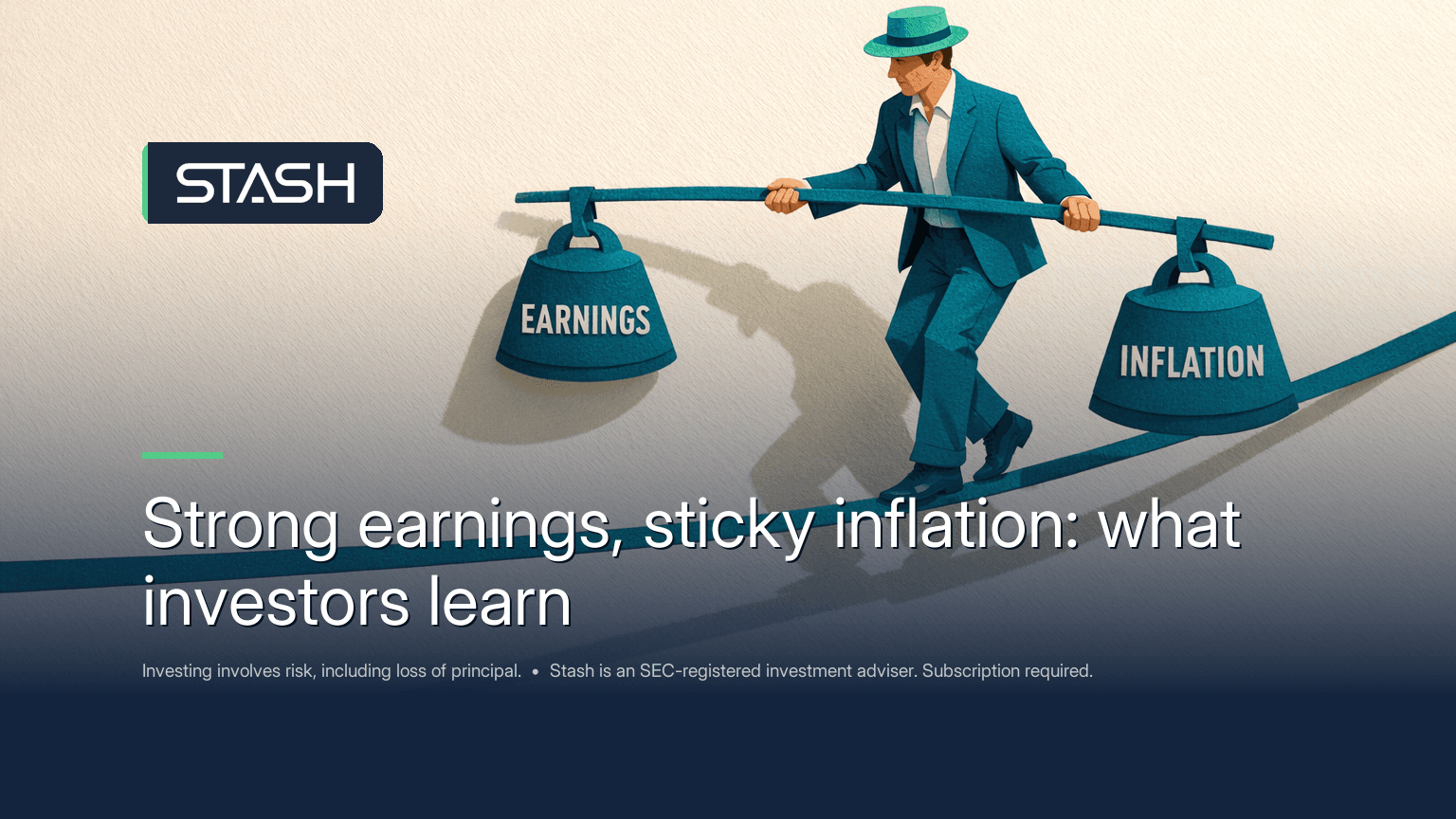
The midpoint of 2026 has brought a strange mix. Corporate profits look strong. Inflation has not cooled as much as many investors hoped.
FactSet reported that, with about two-thirds of S&P 500 companies in, first-quarter earnings were up 27.1% from a year earlier. That was the highest growth rate since the fourth quarter of 2021. FactSet also said 84% of companies beat earnings-per-share estimates, the most since the second quarter of 2021, and those beats came in 20.7% above estimates in the aggregate.
Goldman Sachs Research said in a May 26 outlook that earnings strength could support stocks, and it raised its year-end S&P 500 target. Goldman also noted that gains were concentrated in the AI trade, which can be a caution sign when fewer stocks carry more of the market.
On the other side, inflation stayed sticky. The BLS reported headline CPI rose 3.8% over the 12 months ending April 2026, up from 3.3% in March. The Federal Reserve held its policy rate at a target range of 3.50% to 3.75% at its April 28-29 meeting, according to the FOMC minutes. The labor market also stayed firm, with Reuters reporting a third straight month of above-expectations job growth in May and unemployment steady at 4.3%.
That is the tension. Strong earnings can pull markets up. Sticky inflation and higher-for-longer rates can push against that.
Profits can be strong while prices stay sticky
A company can sell more, cut costs, or charge higher prices and still report strong earnings. That does not mean inflation has stopped hurting households. Your grocery bill, rent renewal, or summer travel budget can still feel tighter.
Markets look forward. If investors believe earnings will keep rising, stock prices may reflect that hope. But inflation changes the math. Higher inflation can raise costs for companies and reduce what consumers can spend. Both can matter at once.
Think about your own budget. You might get a raise at work and still feel pressure because car insurance, child care, and groceries rose too. Your income improved, but your margin did not feel roomy. Markets can work in a similar way.
This is why one data point rarely tells the whole story. Strong earnings are real. Sticky inflation is real. The hard part is that markets have to price both.
Rate uncertainty can offset earnings optimism
Interest rates are one of the biggest reasons mixed headlines can lead to choppy markets. When rates are higher, borrowing can cost more for companies and households. Higher rates can also make future corporate profits look less valuable today.
That does not mean higher rates always sink stocks. It means rates become part of the price investors are willing to pay. If earnings are rising fast enough, investors may still be willing to own stocks. If inflation keeps the Fed cautious, the same earnings news may get a smaller celebration.
This is where the Fed matters. In April 2026, the Fed held its target range at 3.50% to 3.75%. That choice told investors the central bank was not rushing to cut. AP and Reuters coverage ahead of the June CPI data also focused on whether sticky inflation could keep the Fed patient.
For an everyday investor, the lesson is not to guess the next Fed meeting. It is to notice the chain reaction. Inflation affects rates. Rates affect valuations. Valuations affect how much investors may pay for earnings.
Concentration can make the market feel stronger than it is
Goldman Sachs Research flagged that much of the market gain was tied to AI-related momentum. That matters because a market can rise even if leadership is narrow. A few large companies can pull an index higher while many other stocks lag.
This is not a reason to panic. It is a reason to be careful with headlines that say the market is up or down. The market is not one thing. It is a collection of companies, sectors, and investor expectations.
Imagine you are at a group dinner and the average bill looks high because two people ordered expensive wine. The average is true, but it does not describe everyone at the table. A broad index can work that way too.
Diversification is designed for this problem. It does not remove risk. It can help reduce the chance that your whole plan depends on one stock, one sector, or one theme being right.
Historical context
This is not the first time investors have faced good news and bad news at the same time. In late 2021, earnings were still strong, but inflation was climbing. By 2022, the Fed was raising rates at a fast pace, and stocks entered a bear market.
The lesson from 2021 and 2022 is not that strong earnings are meaningless. It is that earnings are only one part of the picture. Inflation, rates, valuations, and investor mood can all change the outcome.
You can also look back to 1999 and 2000. The internet was changing business in a real way, and many companies had exciting growth stories. But prices had run far ahead of profits for many stocks. When expectations reset, the dot-com bubble burst.
History does not repeat on a schedule. But it does show a pattern: big themes can be real and still become overpriced for a time. That is why it helps to respect both innovation and valuation.
The durable lesson
The durable lesson is that market news is usually a blend, not a verdict. Strong earnings do not make inflation disappear. Sticky inflation does not erase every good business result. Markets move because investors are constantly weighing both.
That is also why a long time horizon can help. If you are making your first 401(k) contribution at 28, one CPI print or one earnings season may feel big in the moment. But your investing life may span 30 or 40 years. A long horizon gives you more room to focus on process instead of reacting to every headline.
Diversification is part of that process. It means you are not trying to make one perfect call. You are spreading exposure across different parts of the market, which can help you avoid putting too much weight on the story of the week.
This is general guidance; what's right for you depends on your specific situation. Your income, debts, emergency savings, time horizon, and risk tolerance all matter.
Frequently asked questions
Why can stocks rise when inflation is still high?
Stocks can rise if investors believe company profits will grow faster than the risks from inflation and rates. In mid-2026, earnings data was strong, which supported optimism. But sticky inflation can still limit how far investors are willing to push prices.
Does strong earnings growth mean the market is safe?
No. Strong earnings can be a positive sign, but investing always involves risk. Stock prices also reflect interest rates, valuations, investor expectations, and future uncertainty. A strong quarter does not promise future results.
Why does the Fed matter to everyday investors?
The Fed influences short-term interest rates. Those rates can affect credit cards, auto loans, mortgages, savings yields, and stock valuations. When inflation is sticky, the Fed may be slower to cut rates, which can affect markets and household budgets.
How can diversification help when headlines conflict?
Diversification spreads your money across different investments. It cannot prevent losses, but it can reduce reliance on one company, sector, or theme. That can help when one part of the market looks strong while another faces pressure.
Can Stash help me understand market news?
Stash is a regulated investment adviser — not a bank. We provide general financial guidance and tools that can help you learn, plan, and invest based on your goals. The Stash Plan is $12 a month, with financial guidance built into your phone.
Bottom line
Mid-2026 is a useful reminder that markets can hold two truths at once: earnings can be strong while inflation stays sticky. A diversified plan and a long time horizon can help you read the news without letting one headline drive the whole decision.
Important disclosures
This article is for education only and is not personalized advice. It does not recommend buying or selling any specific stock, ETF, or other security.
Investing involves risk, including the possible loss of principal. Diversification and long-term investing strategies do not guarantee gains or protect against losses in declining markets.
Stash is a regulated investment adviser. Brokerage services are provided by Stash Investments LLC, member FINRA/SIPC, and investment advisory services are provided by Stash Investments LLC, an SEC-registered investment adviser.
Educational only and is not a recommendation to buy, sell, or hold any security. See full disclosures at www.stash.com/disclosures.
Stash is not a bank. Banking services are provided by a partner bank, and FDIC insurance is provided through that partner bank.
Educational only and does not constitute investment, legal, accounting, or tax advice. See full disclosures at www.stash.com/disclosures.

Written by
Team Stash
We want to turn money into a source of hope and opportunity. We teach people how to build good habits, save more and make it easy and affordable to get started investing. So far, we’ve helped over 6 million people create a more secure financial future with our expert advice and award winning investing app.
Related articles
financial-news
Jul 27, 2026
LeBron's NBA salary just went from ~$52.8M to ~$3.9M. His wealth didn't. Here's the money lesson.
financial-news
Jul 27, 2026
Your Money Headlines this Week
financial-news
Jul 21, 2026
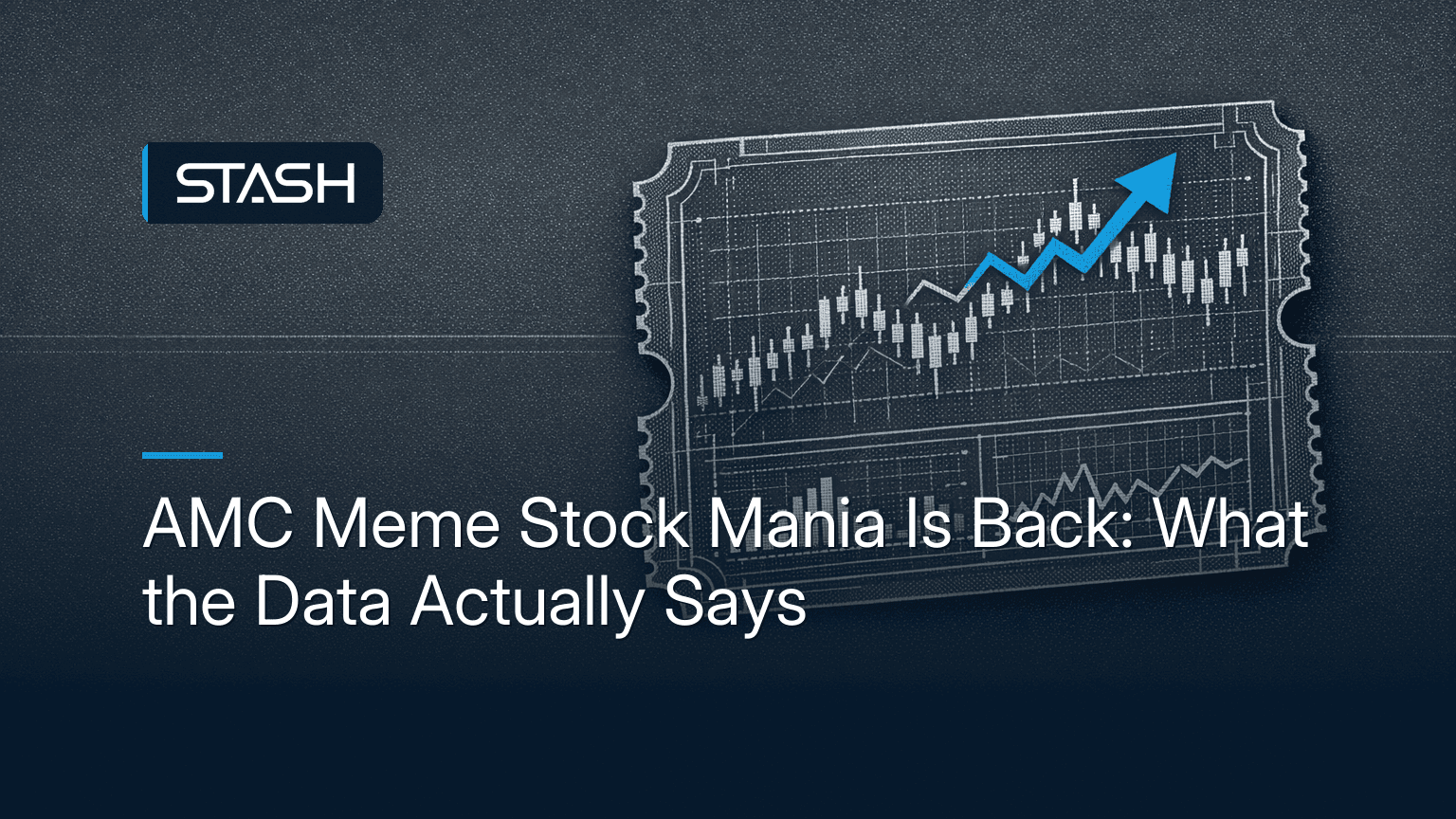
AMC had its biggest quarter in 106 years. The stock is still down 99%. Both are true.
financial-news
Jul 21, 2026
Who Makes Money From the World Cup? Follow the Cash
financial-news
Jul 09, 2026
You already own NVIDIA (yes, you). Here's how much.
financial-news
Jul 01, 2026
Bitcoin's Worst Month in Years: What It Means for You

By using this website you agree to our Terms of Use and Privacy Policy. To begin investing on Stash, you must be approved from an account verification perspective and open a brokerage account.