Can You Buy GTA 6 Stock? The Take-Two Ticker, Explained
Published: Jun 30, 2026
By Stash Editorial Team · Reviewed by Stash Investment Adviser Compliance, Series 65 · RIA Compliance · Last updated June 29, 2026
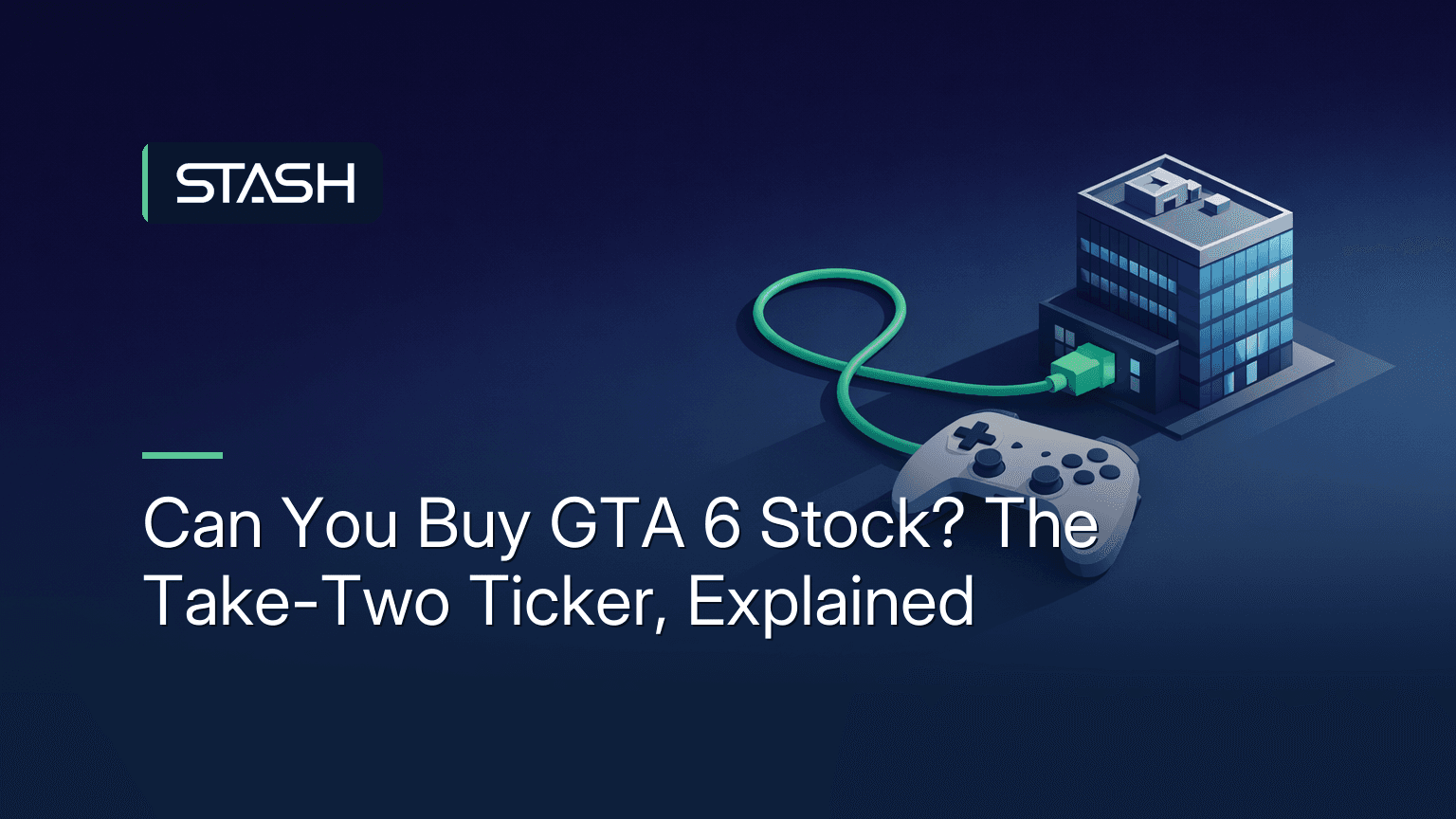
You can't buy "GTA 6 stock." Grand Theft Auto VI is a video game, not a company, and you can't own shares in a single game. The studio behind it, Rockstar Games, is owned by a publicly traded parent company, Take-Two Interactive (TTWO). So the question people are really asking is whether to buy shares of the parent because they're excited about one upcoming release.
This article is general guidance, not personalized recommendations. Stash does not recommend Take-Two, Grand Theft Auto, video-game stocks, or any specific security. Investing involves risk, including loss of principal.
Can you buy GTA 6 stock?
No, not on its own. There is no ticker for a single game. The closest thing is owning the company that publishes it. Rockstar Games is a label owned by Take-Two Interactive, which trades on the Nasdaq under the symbol TTWO. Buying TTWO means buying a stake in Take-Two's entire business, not a slice of one title.
That distinction matters more than it sounds. Take-Two is far bigger than any single franchise. It owns Rockstar (Grand Theft Auto, Red Dead Redemption), 2K (NBA 2K, sports and strategy titles), and Zynga (mobile games). One blockbuster is a large part of the story, but it is still one part of a company with many products, costs, and obligations.
So the practical translation of "how do I invest in GTA 6" is "how would owning a piece of a large game publisher fit into my plan?" That's a very different question, and a healthier one.
What actually moves when a blockbuster game launches
A hit game and a winning stock are not the same thing. Here's why the link is looser than the headlines suggest.
Expectations get priced in early. Markets are forward-looking. By the time a release is the most talked-about thing on the internet, a lot of that excitement may already be reflected in the share price. A game can sell record copies and the stock can still fall if results merely meet what investors already expected.
One title is a slice of the whole. Even a generational hit shows up as a surge in one revenue line for a company that also carries development costs, marketing spend, debt, and other franchises that may be doing better or worse. A single launch rarely re-rates an entire business by itself.
Timing risk is real. Big games slip. Development delays, launch-window changes, and "when it's ready" messaging are common in the industry. A date that moves can move sentiment with it, in either direction.
Launches are lumpy. A company built around a few giant releases can have a huge quarter followed by quiet ones. That lumpiness can make the stock more volatile than a business with steady, recurring revenue.
None of this says a game publisher is a bad investment or a good one. It says the cause-and-effect that feels obvious ("great game, therefore great stock") skips several steps that actually determine the outcome.
Why it matters for everyday investors
If you're in your late twenties or thirties, building an emergency fund, and contributing to a first retirement account, a hyped launch can make a single trade feel urgent and exciting. But investing tends to work best when each decision has a job: retirement, long-term wealth building, a home, or another goal.
That's especially true with single-company exposure. One business can face delays, weaker-than-hoped sales, rising costs, leadership changes, regulatory questions, or valuation swings. Even admired companies have stretches when their share price falls sharply. Putting a meaningful chunk of your savings into one stock because you love one of its products concentrates that risk.
Here's a grounded example that is not about Take-Two and is not a performance forecast. Say you have $5,000 in a brokerage account and you're curious about a single company. If $250 went toward it, that's 5% of the account. That framing is only about concentration, not returns; the $250 could rise or fall, and the full amount could decline in value.
This is where the Stash Way comes in: invest regularly, diversify, and invest for the long term. Excitement about a release isn't a reason to abandon those principles; if anything, it's a reason to lean on them. Many investors get broad exposure to industries like gaming and tech through diversified funds such as a complete guide to index funds, which spread a single bet across many companies. If you do want individual names, learning the stock market terms and how a company actually makes money beats trading on a trailer.
Stash is a regulated investment adviser, not a bank, and provides general financial guidance rather than personalized security recommendations. Subscription plans have fees, and those costs can affect your results. Nothing here is an offer to sell, or a solicitation of an offer to buy, any security.
Common misconceptions about GTA 6 and Take-Two stock
The biggest misconceptions are that a famous game guarantees a rising stock, that you can buy the game itself, or that waiting for one launch is a strategy. None of those hold up.
Misconception: A record-breaking game means the stock goes up
Correction: Sales can break records while the stock falls, because markets often price expectations in advance. The reaction depends on results versus what investors already assumed, plus the company's costs, guidance, and the rest of its portfolio.
Misconception: I can buy shares in the game itself
Correction: You can't own a single game. The only public way to get exposure is the parent company, Take-Two (TTWO), whose value reflects its whole business, not one title.
Misconception: Waiting for the big launch is an investing plan
Correction: A single release isn't a substitute for a plan built around your goals, time horizon, risk tolerance, and costs. Diversification exists precisely because no one can reliably predict how one event plays out.
The bottom line
There's no such thing as GTA 6 stock. The publicly traded company behind Rockstar Games is Take-Two Interactive (TTWO), and owning it means owning the whole business, not one game. A blockbuster can be great for a company and still disappoint as a trade, because expectations, timing, costs, and the rest of the portfolio all matter. If the launch has you interested in investing, channel that energy into a plan: invest regularly, diversify, and think in years, not release dates.
Frequently asked questions
What is the GTA 6 stock symbol?
There isn't one for the game. Grand Theft Auto VI is published by Rockstar Games, which is owned by Take-Two Interactive. Take-Two trades on the Nasdaq under the ticker TTWO.
Is Rockstar Games publicly traded?
Not on its own. Rockstar is a label within Take-Two Interactive. To get public-market exposure to Rockstar, investors would look at Take-Two (TTWO), which also owns 2K and Zynga.
Does a successful game guarantee the stock will rise?
No. Stock prices reflect expectations that may already be priced in, along with the company's costs, guidance, and other products. A hit game can coincide with a flat or falling share price.
How should a beginner think about a single stock like this?
Treat any single-company position as one small, optional piece of a diversified plan, sized so a loss wouldn't derail your goals. Many beginners get industry exposure through diversified funds instead of betting on one name.
Important disclosures
Investing involves risk, including the possible loss of principal. See full disclosures at www.stash.com/disclosures.
Educational only and is not a recommendation to buy, sell, or hold any security. See full disclosures at www.stash.com/disclosures.
Stash is not a bank. Banking services are provided by a partner bank, and FDIC insurance is provided through that partner bank.
Educational only and does not constitute investment, legal, accounting, or tax advice. See full disclosures at www.stash.com/disclosures.

Written by
Team Stash
We want to turn money into a source of hope and opportunity. We teach people how to build good habits, save more and make it easy and affordable to get started investing. So far, we’ve helped over 6 million people create a more secure financial future with our expert advice and award winning investing app.
Related articles
financial-news
Jul 27, 2026
LeBron's NBA salary just went from ~$52.8M to ~$3.9M. His wealth didn't. Here's the money lesson.
financial-news
Jul 27, 2026
Your Money Headlines this Week
financial-news
Jul 21, 2026
AMC had its biggest quarter in 106 years. The stock is still down 99%. Both are true.
financial-news
Jul 21, 2026
Who Makes Money From the World Cup? Follow the Cash
financial-news
Jul 09, 2026
You already own NVIDIA (yes, you). Here's how much.
financial-news
Jul 01, 2026
Bitcoin's Worst Month in Years: What It Means for You

By using this website you agree to our Terms of Use and Privacy Policy. To begin investing on Stash, you must be approved from an account verification perspective and open a brokerage account.