Budgeting for Young Adults: 17 Smart Tips for 2025
Published: Jan 08, 2024
• Updated: Dec 16, 2024

Budgeting can seem like a daunting task, especially for young adults just starting to take control of their finances. From covering your basic necessities like rent and utilities to facing new expenses like student loan payments or health insurance premiums, it’s easy to feel overwhelmed. And of course, you want to put money toward things you want in life, from fun things in the present to big goals down the road. If that sounds like a lot, take heart: by learning how to budget and manage your money now, you can feel empowered instead of intimidated—and set yourself up with a better financial picture now and in the future.
This guide will walk you through actionable tips to build a budget that’s realistic for your current lifestyle and start mapping out a path toward long-term financial success. There’s no better time than the present to start honing your money-management skills, because budgeting for young adults can be the foundation for life-long healthy money habits.
Budgeting is the process of creating a plan for how you’ll spend and save your money to help achieve your goals.
Why you should start budgeting as a young adult
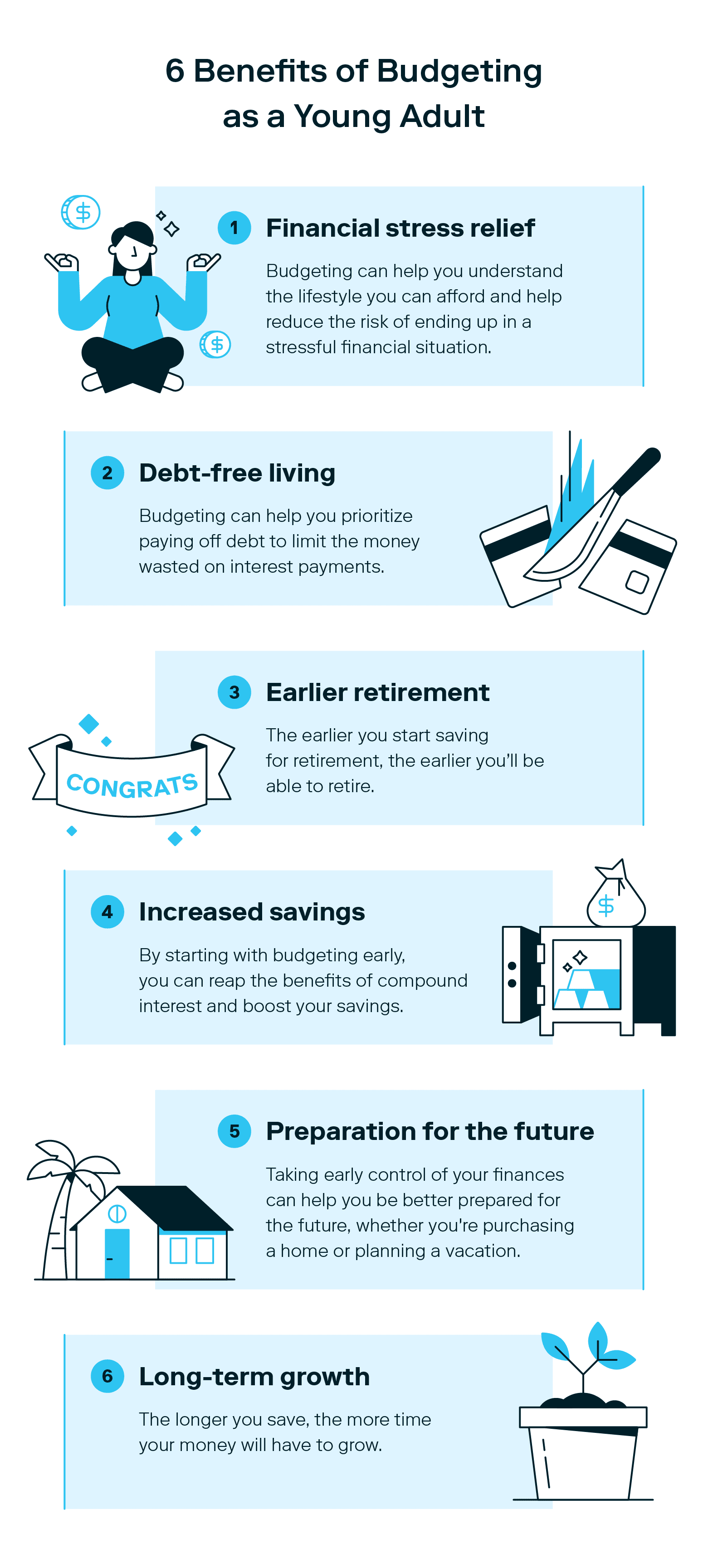
As a young adult, you may feel that budgeting is something that can wait. But by putting off prioritizing your financial health, you’ll be missing out on a wide range of benefits, including:
Financial stress relief: Taking the time to plan your finances and set spending limits can help you get a bird’s-eye view of your finances so you have a better understanding of what you can afford. This can help prevent the money stress that can come from poor money management.
Debt-free living: A large benefit of budgeting is that it allows you to allocate specific amounts of money to help pay off your debts. By prioritizing debt payments early in your life, you can limit the money wasted on interest payments.
Earlier retirement: When it comes to retirement, the sooner you start saving, the earlier you can retire. Taking control of your finances at a young age can help maximize your retirement savings.
Increased savings: By automating your savings and starting an emergency fund during your budgeting process, you can increase your ability to save for the bigger things you want in life.
Preparation for the future: Similar to planning for retirement, setting a budget can help you be better prepared for the future, whether you’d like to purchase a home or go on an international vacation.
Long-term growth: If you start taking your finances seriously at a young age, you can reap the benefits of time, leading to increased growth compared to starting years down the line.
Financial security: Budgeting can help you build financial independence, avoid the stress of living paycheck to paycheck, and achieve the financial stability you need to feel confident you can maintain your standard of living and reach your goals.
To help you on your financial journey, we’ve gathered the following tips that can help with budgeting for young adults:
Track your spending
Prioritize paying off debt
Set short and long-term goals
Create a detailed plan
Try a zero-sum budget
Start an emergency fund
Take advantage of employer matching
Practice frugal habits
Follow the 50/30/20 budget
Save for retirement
Use a bullet journal
Talk to a professional
Keep taxes in mind
Try a side-hustle
Use personal finance apps
Protect your health
Negotiate your salary
17 practical money management tips for young adults in 2025
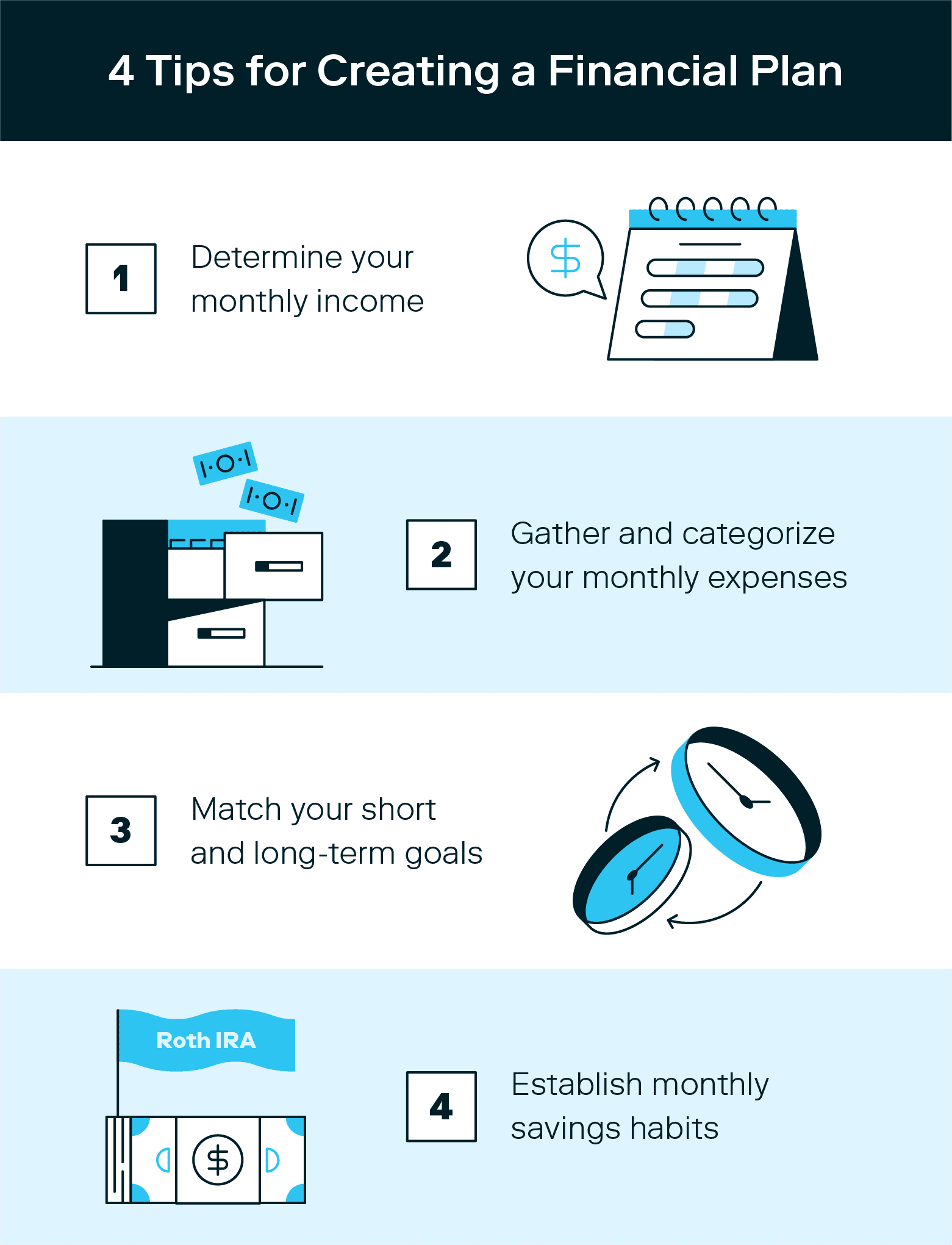
1. Create a detailed plan
A financial plan is a way to assess your current financial situation, identify long-term financial goals, and create a road map to achieve them.
No matter your financial situation or goals, creating a detailed financial plan for young adults is a surefire way to keep yourself committed to financial success. A budget and a financial plan may sound very similar. A budget is a tool for tracking and managing your spending and savings on a day-to-day basis, while a financial plan actually maps out your goals over the long term and establishes your plan to achieve them.
2. Track your spending
Before you can get started on your young adult budget, you must first understand where your money is going. You can do this in many ways, whether by keeping track of your receipts, using an app, or setting up a spreadsheet.
When tracking your spending, it can be helpful to categorize your transactions to help get a sense of what you’re spending your hard earned money on. These categories may include things like rent, groceries, utilities, clothing, entertainment, and more.
Remember, there is no set group of categories you should follow, so be sure to categorize your spending however works best for you and your lifestyle. Once you get a big-picture sense of your spending, you can better organize a budget that makes sense for you.
3. Create a realistic budget
When you make your first budget, keep one word in mind: realistic. Your planned expenses shouldn’t exceed your income—otherwise you’ll be likely to wind up in debt that can be hard to get out of. At the same time, you need a budget you can truly stick to; cutting out every little luxury isn’t sustainable.
Choosing a budgeting strategy can be a game-changer in creating a realistic budget that makes sense for you.
The 50/30/20 budget
Under the 50/30/20 rule, you’ll split up your monthly income as follows:
50% for essentials
30% for wants
20% for savings
For example, if you make $4,167 a month, you’ll dedicate $2,083.50 to essentials, $1,250.10 to wants, and $833.40 to savings.
By sticking to this simple rule, you can easily budget your spending without skipping out on fun purchases and experiences, all while satisfying your monthly savings goals.
The zero-based budget
Zero-based budgeting is a method in which you use every penny of your income every single month. You’ll allocate your monthly income toward your wants and needs, debt payments, savings goals, and all other expenses until every penny of your income is accounted for.
For example, let’s say you have a monthly take-home income of $4,167. With the zero-sum method, your budget may look like this:
Monthly expenses | Cost |
|---|---|
Rent | $1,400 |
Groceries | $500 |
Utilities/bills | $350 |
Car insurance | $200 |
Entertainment | $350 |
Car loan payments | $300 |
Credit card payments | $100 |
Student loan payments | $350 |
Emergency fund savings | $250 |
Retirement savings | $467 |
As you can see, you’ve planned how to allocate every dollar of your income, taking into account spending on essentials, fun spending, and debts—while also putting money away for savings.
The envelope budget
With the envelope method, you’ll dedicate a physical envelope to each of your spending categories. When you get paid, you’ll cash your paycheck (or withdraw cash if you get paid by direct deposit) and put the specified amount for each spending category into its designated envelope. You’ll spend money from each envelope throughout the month. And when an envelope is empty, you’re finished spending on that category for the month.
For example, if you allow yourself $500 a month for groceries, you’ll put $500 into your grocery envelope. Then, when it’s time to go grocery shopping, you’ll take the grocery envelope and head to the store. Once you’re finished, you’ll put the change back into the envelope, so it’s ready for next time. Once you run out of money, you’re done buying groceries for the month.
This method can be a great way to keep yourself from overspending, as you’ll have a physical sense of the money that’s leaving your hands with each purchase.
4. Use a budgeting app
A budgeting app can make the entire process of managing your money faster, easier, and even fun! These tools can automate tasks like tracking and categorizing your expenses, saving you the time and hassle of manually entering that info into a spreadsheet or writing things down. Apps can also make it easier to monitor your spending to ensure you’re not going over budget. And many of them have handy features to help you focus on the future, like setting savings goals and seeing your progress or digging into statistics to analyze your spending and saving habits.
5. Build an emergency fund
Life is full of curveballs, and they can seriously derail your finances if you’re not prepared. Whether it’s job loss, car damage, or any other financial emergency, there are times when you’ll need extra money to handle an unexpected situation. Fortunately, you can help dampen the financial burden of these situations by starting an emergency fund.
Generally speaking, you’ll want your emergency fund to cover around three to six months’ worth of expenses. By building up an emergency fund, you can avoid going into debt or dipping into savings when large, unforeseen expenses arise. And you’ll enjoy the peace of mind knowing that you’re prepared to handle any emergencies that could impact your financial well-being.
6. Set short, medium, and long-term savings goals
Got your eye on an expensive purchase? Hoping to buy a house? Want a nest egg for your golden years? Setting savings goals now can help you have the money when you need it future. Start a practice of writing down your goals, and review the list when you update your budget each month. This will help keep them top of mind when you’re making decisions about how to spend and save your money. To get serious about saving, break each goal down into monthly savings targets and put those in your budget so you’re making concrete progress over time.
Your goals should be customized based on your specific priorities and things you want to achieve in the near term, as well as the lifestyle you want down the road. For example, a short-term goal may be to replace your car in one year. A medium-term goal could be to pay off all of your student loans within three years. And a long-term goal might be to retire by age 60.
7. Automate your savings
Whatever your financial goals, automating the saving process can help you work toward them more easily. Set up an automatic transfer from your checking account to your savings account every month so you don’t accidentally spend money you planned to save.
Another method to automate savings is to split your direct deposit into two different accounts, sending a specified amount straight into your savings account. Having that money out of sight and out of mind can help resist the temptation to spend.
With automated savings, you can rest easy knowing that your savings goals are being met without you even having to lift a finger, allowing you to focus on other aspects of your financial health.
8. Spend smarter
One reason budgeting for young adults can feel stressful is that you might not yet be earning as much as you’d like for your ideal lifestyle. But there are lots of ways to save money, on both necessities and nice-to-haves, that can help you stretch your income further. Try these tips to cut down on your expenses so you can free up cash for things that matter most to you.
Understand needs vs. wants: Group your expenses into necessities (like rent, utilities, and groceries) and non-essentials (like entertainment and vacations). This empowers you to make informed decisions about where you realistically can cut back.
Leverage student discounts: If you’re still in school, your student ID can be a ticket to significant savings on all kinds of things: phone plans, electronics, software, gym memberships, subscription services, and more. Before you buy, ask if the company offers a student discount.
Lower your electric bill: Electricity is a necessary expense, but you might be spending more than you need to. Adopt strategies to save on your electric bill, such as switching to more efficient bulbs and appliances, adjusting the setting on your thermostat and hot water heater, and consuming less energy.
Shop and negotiate for lower rates: A little comparison shopping can help you save on things like your phone bill, car insurance, and internet service. Shop around to see if there are better deals out there, and review your current plans to ensure you’re not paying for more than you need. You can even call your current providers and ask about discount options—many of them will offer cheaper bundled plans or give you a discount to keep you as a customer.
Consider alternate transportation options: Getting around town can get expensive. Consider carpooling to work with a colleague or taking public transportation to save on gas. When you go to an event, save on the cost of parking by driving with a group. And if you’re not driving someplace, consider whether there’s a convenient public transport option before you decide to spend money on a ride-share app.
Take advantage of cash back and rewards programs: By choosing the right debit or credit card, you can save money every time you spend money. Look for cards that offer rewards programs, like earning cash back or points you can redeem for things you want. Just keep in mind that if you’re using a credit card to earn rewards, you’ll want to pay it off in full every month to avoid racking up interest charges.
9. Practice frugal shopping habits
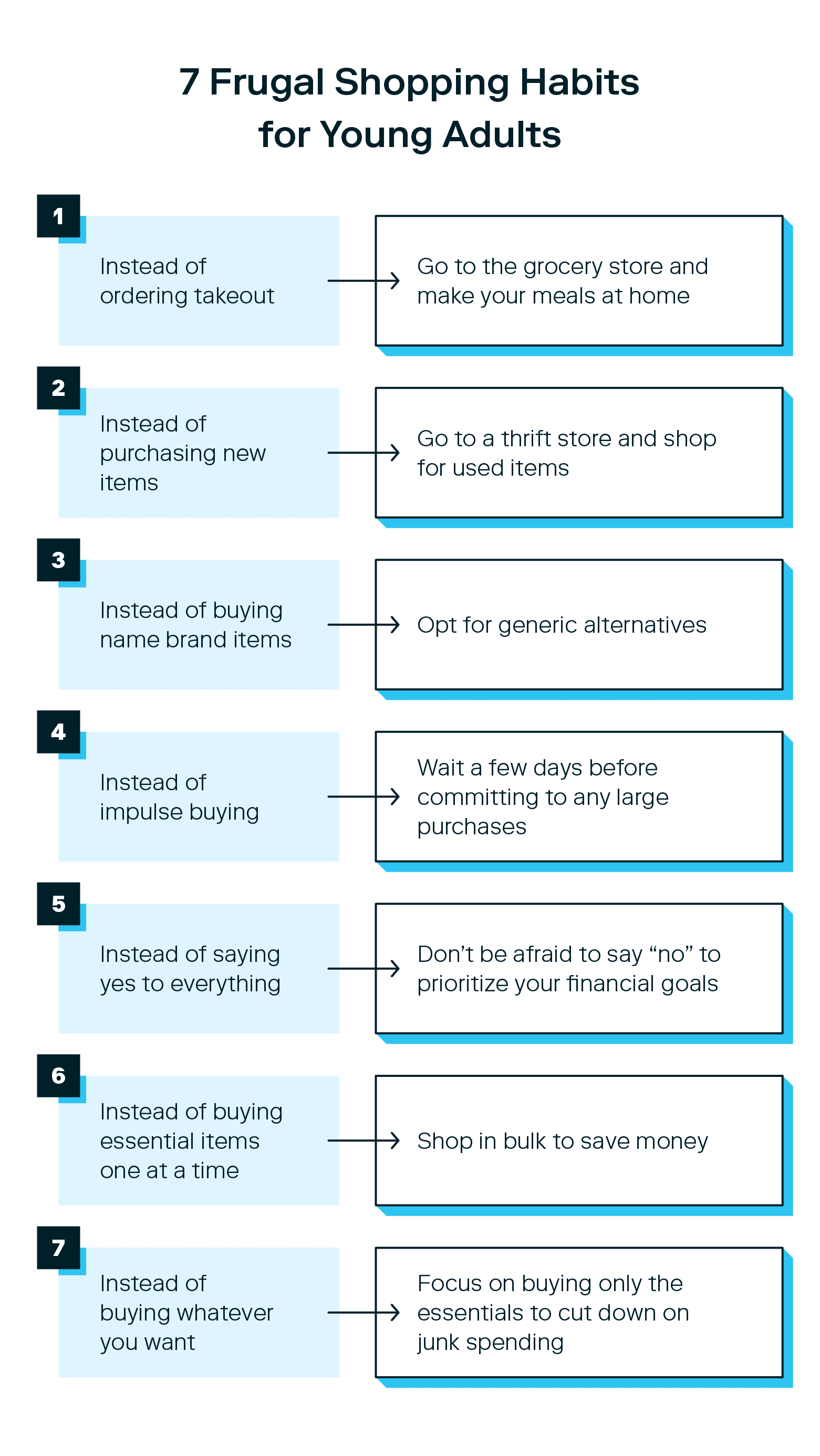
Being frugal doesn’t have to mean making huge sacrifices or going without everything you want. It’s about making smart spending decisions that align with your values and financial goals. While nobody goes from a mindless spender to a frugal shopping wizard overnight, adopting a few habits can help you spend less on your shopping outings.
Making meals at home: The cost of restaurants and take-out can add up fast. By cooking at home more often, you can cut down on your food costs. And you might even find that cooking becomes a fun hobby!
Shopping secondhand: Whether you buy a used car or furnish your home with fun thrift store finds, shopping secondhand can help you save money on things you want and need.
Skipping brand name items: Generic brands are usually much cheaper than their brand-name counterparts. By shopping for generic brands, you can cut costs at the register.
Slow your roll on impulse buys: If you’re prone to impulse spending, try forcing yourself to wait a few days before making any big purchases. Often, waiting it out can help you realize if your desired purchase is truly worth it.
Learning to say “no”: Peer pressure can easily lead you into spending that goes against your financial goals. By learning to say “no,” you can avoid undermining your plans or blowing your budget.
Buying in bulk: From toilet paper to canned goods, buying in bulk can sometimes come with huge savings, keeping you from paying more than you have to for your essential items.
Buying essential items only: By sticking to only the essentials every time you shop, you can avoid throwing money away on unnecessary discretionary spending. Creating a list before you go shopping can help you stick to the task at hand and not get distracted by stuff you don't need.
10. Negotiate your salary
On top of prioritizing saving money to improve your financial well-being, you can also work toward increasing your monthly income by negotiating your salary. If you’re new to the work world, it might feel intimidating to ask for a raise. But once you’ve got more than a year of experience under your belt, it can pay to do some research and make a case for increasing your salary.
First determine your fair market value by assessing the salary of similar job postings. Then, you’ll want to bring evidence of your value to the company to help show your boss why you deserve a raise. From there, be prepared to answer any questions your boss may have. While this isn’t guaranteed to work every time, you may be able to earn an increased wage, which can help you achieve your financial goals.
11. Try a side-hustle
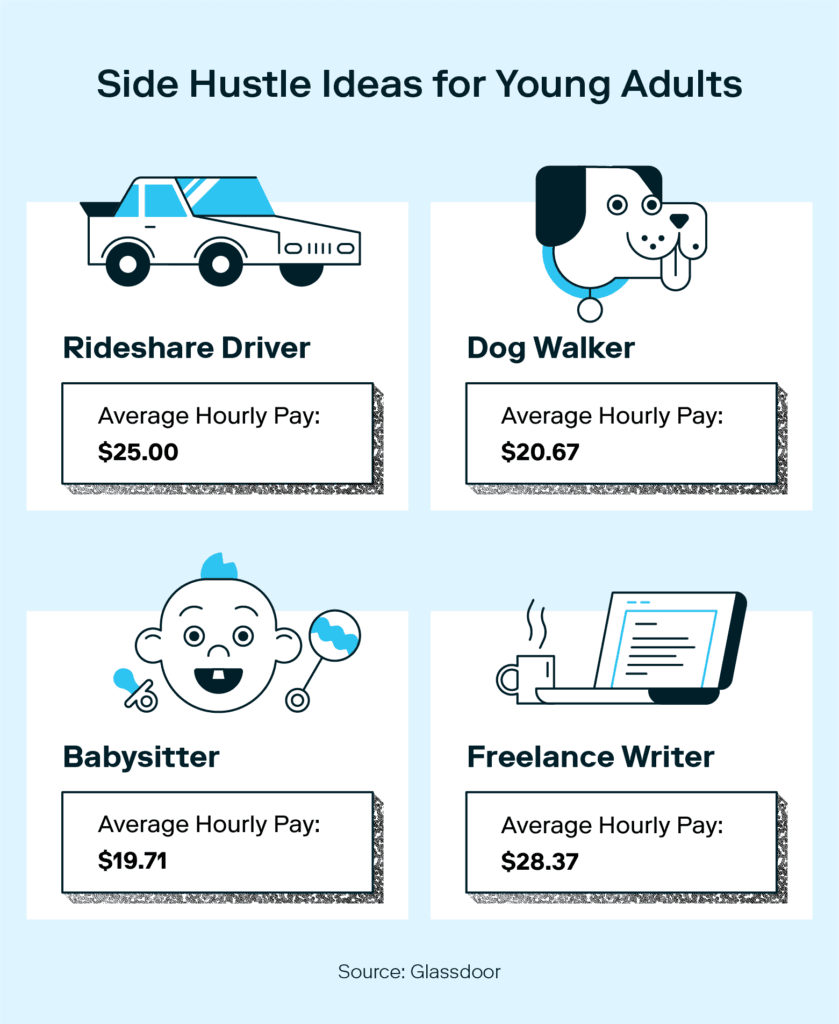
If you’re looking to turn your free time into some extra cash, you may want to take up a side hustle. There are lots of options out there, from picking up a part-time gig to turning one of your unique skills or talents into a source of income. You can put your extra cash toward your financial goals, like paying off debt, saving for a big purchase, investing in the stock market, or setting yourself up for a comfortable retirement down the line.
Need some inspiration? Try one of these ideas:
Become a rideshare driver (average hourly pay: $21.41)
Tutor your favorite subject (average hourly pay: $18.33)
Sell your talents as a freelance writer (average hourly pay: $24.26)
Start babysitting (average hourly pay: $16.22)
Become a dog walker (average hourly pay: $17.54)
No matter your interests or talents, there are many paths to bring in some extra income. If time is a limiting factor, consider passive income sources.
12. Prioritize paying off debt
Most people find themselves in debt at some point, but if it’s not managed well, it can quickly pinch your budget, make it hard to save for the future, and negatively affect your credit score. That’s especially true if you have high-interest debt, like credit card balances.
When you build your budget, prioritizing a plan to get out of debt can help you reduce the amount of money you spend on interest payments and free up money for your financial goals. Consider trying one of these debt-repayment strategies:
Snowball method: You can follow the snowball method by paying off your debts starting with the smallest amounts and working your way up to the largest. This tends to work well for people with small debts, typically less than $3,000.
Avalanche method: With the avalanche method, you’ll prioritize paying off your debts by starting with the highest interest rates and working your way down to the debts with the lowest interest rates. That way, you’re limiting the time spent holding on to debt with high interest rates and your overall interest expense.
Whether you decide to use the snowball or avalanche method, continue making the minimum monthly payments on all of your debts as you focus your extra money on paying off the highest-priority debts.
13. Save for retirement
As a young adult, meeting your retirement goals can seem like a far-fetched idea or tomorrow’s problem. But the reality is there is no better time to start saving for retirement, as the sooner you start, the earlier you’ll be able to retire. That’s because money that’s invested in a savings or retirement account can earn interest or returns, and the longer the money’s invested, the more time it has to grow and benefit from compounding.
Here’s an example:
Let’s say you begin saving $150 a month with an average return of 1% a month, compounded monthly over 30 years. After those 30 years, your retirement savings will be nearly $525,000.
On the other hand, let’s say you waited to start your retirement account and invested $1,200 a month for only 10 years with an average return of 1% a month. Despite putting aside more money each month, your retirement savings would only be around $275,000.
As you can see, time is your friend when saving for retirement. If you find it hard to prioritize retirement planning, take a moment to find out how much money you'll need to retire at the age you want. Then use a retirement calculator to plan out a strategy for getting there.
14. Take advantage of employer matching
If your employer offers matching contributions for a 401(k) or other retirement account, you can give your retirement savings a huge boost by contributing enough to get the full match. With employer matching, your company deposits the same amount that you do into your retirement account, up to a certain amount.
For example, if your salary is $50,000 and your company offers 6% matching, your employer will match your contribution up to $250 each month. This means if you decide to contribute $250 a month, your employer will also contribute $250, bringing the total monthly contribution into your 401(k) to $500.
By taking advantage of this benefit, you can increase the amount of money that goes toward your retirement every month, allowing you to build up your retirement savings and accumulate wealth more quickly. Think of it this way: your company’s matching contribution is money they’ll pay you as long as you contribute to your retirement account. If you don’t take advantage of it, you’re leaving cash on the table!
15. Keep taxes in mind
Whenever you’re thinking about budgeting and financial planning, you’ll want to keep your taxes in mind. After all, the amount of money listed for your gross salary isn’t the same amount that will reach your bank account. Because of this, always use your monthly income after taxes (aka, your take-home pay) when planning your budget.
If you do freelance or contract work, taxes aren’t generally withheld from your paychecks. That means you’re responsible for paying income tax yourself on those earnings. Factor that into your budget when you’re calculating your income, and be sure to set aside money to pay any tax you’ll owe so you’re not surprised by a big bill when it’s time to file your taxes.
In addition, you’ll want to do your research and see if you’re eligible for any tax deductions that can put money back into your pocket. Examples of common tax deductions include deductions for student loan interest and charitable donations. If you’re unsure what deductions you qualify for, you may want to talk to a tax professional.
16. Talk to a financial advisor
Many people think that financial advisors are only for those with lots of money—or for when you’re in a financial crisis. But the truth is, a little help from a pro can come in handy when budgeting as a young adult too.
By being proactive and going over your finances with a professional, you can come up with a plan tailored to your income, expenses, and financial goals. Plus, it doesn’t hurt to have someone who can answer all of your questions and help you create a personalized budget based on the advice of an expert.
17. Invest in your financial literacy
They say knowledge is power—and that applies to your financial health. Make it a point to advance your financial literacy. By learning about money management, financial vehicles, investing, and financial planning, you’ll be more empowered to make informed decisions about your money. There are tons of resources out there, from blogs to books to podcasts. And there’s plenty of info and inspo on social media, with influencers who focus on practical money management strategies.
Explore resources and find the ones that resonate with you. Consider adding financial education to your regular media diet, whether that means following influencers and brands you like on social media, subscribing to newsletters, or listening to podcasts. Increasing your financial literacy can be both educational and entertaining!
Get started with budgeting for young adults
Building a budget may not sound glamorous, but it’s one of the most empowering things you can do. It helps you take control of your finances now and pave the way for a brighter future. Every smart spending decision, and every dollar you put into savings and investments, can get you closer to long-term financial stability.
Remember, you don’t need to figure out everything at once—small actions over time will make a big difference. Ready to get started? Create your first budget today and get on the road to financial health.

Investing made easy.
Start today with any dollar amount.

Budgeting for young adults FAQs
Still have more questions about budgeting advice for young adults? We’ve got answers.
How do you keep track of a budget?
You can keep track of a budget in many ways, including using a pen and paper, spreadsheets, budgeting templates, a bullet journal, or budgeting apps.
Is the 50/30/20 rule realistic?
While the 50/30/20 rule can be a realistic option for some, it may not work for everyone’s specific financial situation. Because of this, prioritize following a budgeting plan that works best for you and your financial goals.
What is the 70% rule for budgeting?
The 70% rule for budgeting is when you allocate your money as follows:
70% for all spending
20% for saving and investing
10% for debt payments

Written by
Tara Blaine
Tara Blaine draws on over 20 years of experience as a writer to translate seemingly complex financial ideas into insights readers can put to work in their everyday lives. She’s written personal finance education materials for numerous institutions, helping customers learn smart techniques for budgeting, overcoming debt, saving money, and planning for their long-term financial health.
Related articles

budgeting
Jun 10, 2026
How Much Should I Have in an Emergency Fund Right Now
budgeting
May 04, 2025
How to Build Credit from Scratch in 2025

budgeting
Apr 27, 2025
Who gets the insurance check when a car is totaled?

budgeting
Apr 09, 2025
How to Make Extra Income While Working Full-Time

budgeting
Apr 08, 2025
How Much Does the Average American Make?

budgeting
Apr 07, 2025
How to Calculate Monthly Income

By using this website you agree to our Terms of Use and Privacy Policy. To begin investing on Stash, you must be approved from an account verification perspective and open a brokerage account.