What’s Bankruptcy and How Can It Affect Me?
Published: Apr 28, 2023
• Updated: Aug 22, 2024
Bankruptcy is a legal process that lets businesses reorganize.
You’ve probably heard of bankruptcy, but wondered what it actually means.
That’s especially true now, with numerous companies in the retail and energy industries filing for bankruptcy protection.
So what is it?
Bankruptcy is a legal process that allows businesses that are unable to pay their debts to come up with a plan to pay back creditors, or people to whom they may owe money as a result of their normal business operations. The proceeding is typically handled in court and overseen by a judge.
Businesses may file for bankruptcy for a variety of reasons. Market forces may be unfavorable, the economy may be doing poorly, the business may have mismanaged its finances, or someone key to the company’s operations may have left, making it difficult for the business to continue. Whatever the case, the business needs to either stop functioning, or reorganize to meet its obligations and become profitable again.
It’s all about chapters
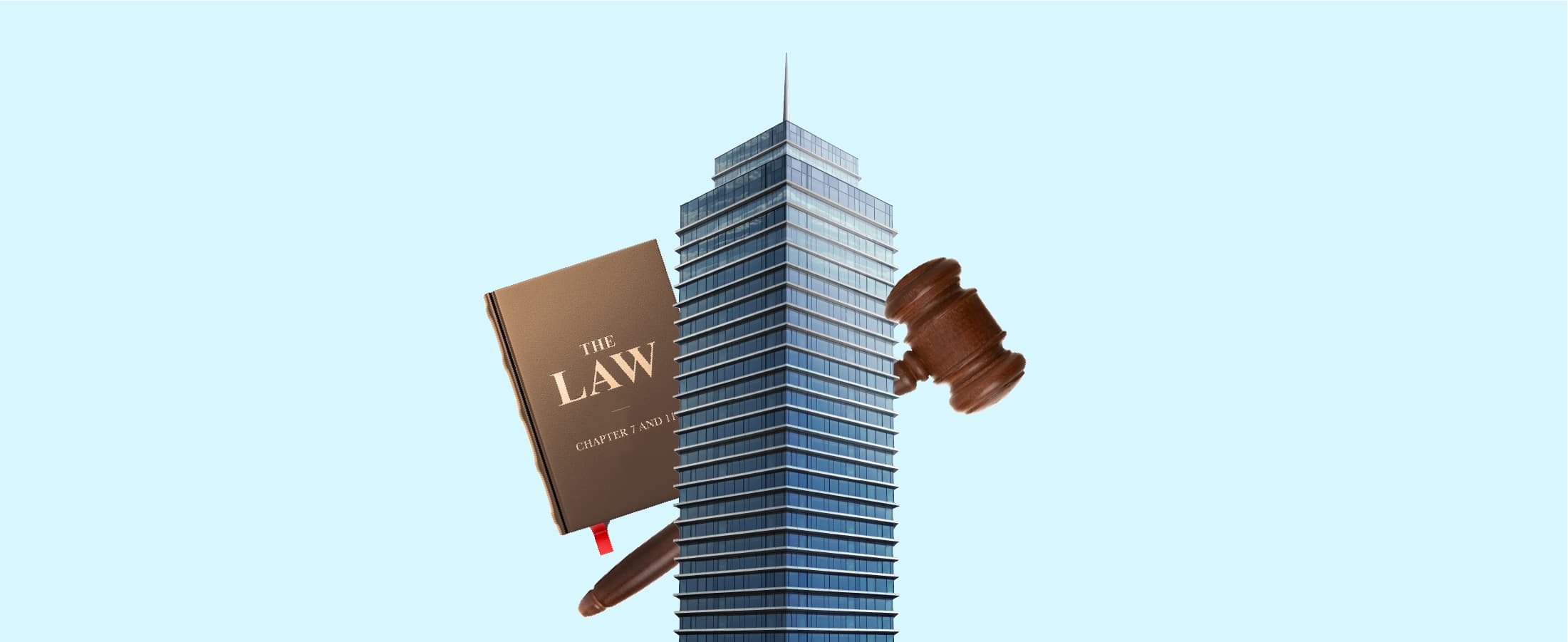
Bankruptcy is organized into chapters, which refer to subsections of the actual bankruptcy law. For example, businesses most often file for bankruptcy under chapters 7 and 11.
Chapter 7 bankruptcy results in the complete liquidation of a business. That means the business stops all operations, and its assets, or what it owns, are sold off. Those proceeds from the sale of those assets are then distributed to creditors. Any money left after paying back creditors is returned to shareholders.
Chapter 11 bankruptcy allows a business to reorganize, and potentially to round up new sources of financing, while discharging, or getting rid of, some of its debt. It hopes to become profitable again as a result of the reorganization.
Good to know: Individuals can also file for bankruptcy. Like businesses, they can do so under Chapter 7, or under an additional section called Chapter 13. Both are court-mediated processes that allow individuals to either discharge or repay debt. Chapter 7 provides for complete liquidation of debts, whereas in Chapter 13 a debt repayment plan is drafted.
What happens to stocks and bonds of bankrupt companies?
When a company files for bankruptcy, it pays its secured creditors first. That means entities like banks that have loaned money for things like a mortgage for the company’s property or equipment, are first in line. Bondholders are also likely to get paid because the company has agreed to pay them back by issuing bonds; equity shareholders, on the other hand, are usually paid last and often end up losing money.
When public companies file for bankruptcy, the stock may also be delisted from its main stock exchange. Delisting is a process whereby a company is removed from the exchange where it trades for failing to meet the minimum value for its shares, typically $1 a share. If the company is delisted, it may continue to trade “over the counter,” on either the Over the Counter Bulletin Board (OTCBB), or the Pink Sheets. (Read more about delisting here.)
While there is no federal law that prohibits investing in the shares of companies in bankruptcy, it is extremely risky and can lead to substantial financial losses. It is possible for existing shareholders to lose all (or nearly all) of their investments. This is because creditors get paid first and shareholders only receive what’s left over, if there’s anything left over at all.
Remember, all investing involves risk and you can lose money on your investments. Stash does not recommend investing in the shares of companies in bankruptcy.

Written by
Team Stash
We want to turn money into a source of hope and opportunity. We teach people how to build good habits, save more and make it easy and affordable to get started investing. So far, we’ve helped over 6 million people create a more secure financial future with our expert advice and award winning investing app.
Related articles
investing
Oct 02, 2026
Trust your money to experts, not chatbots
investing
Jun 25, 2026
Should You Buy IPOs? 4 Myths About Hot New Listings
investing
Jun 18, 2026
Best Index Funds for Beginners and How to Pick One
investing
Jun 10, 2026
What Is an Index Fund? A Complete Beginner's Guide
investing
Jun 09, 2026
How to Start Investing: A Beginner’s Guide for 2026
investing
Jun 04, 2026
What Is Quantum Computing? An Investor’s 2026 Guide

By using this website you agree to our Terms of Use and Privacy Policy. To begin investing on Stash, you must be approved from an account verification perspective and open a brokerage account.