What Happens When a Company Gets Delisted?
Published: May 05, 2020
• Updated: Aug 22, 2024
A company can get kicked off an exchange if its share price falls too far.
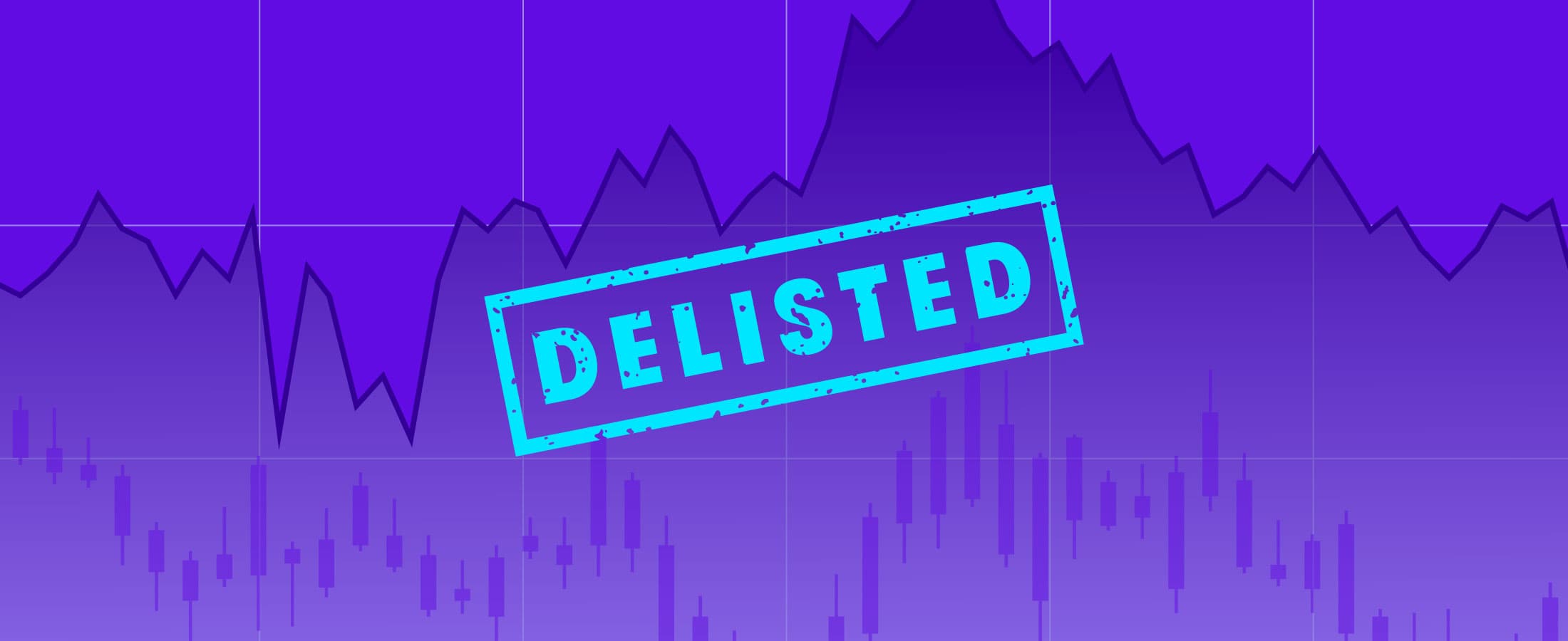
When companies go public, they are listed on exchanges such as the New York Stock Exchange (NYSE) and the Nasdaq.
But sometimes, businesses can encounter difficulties, or may even declare bankruptcy. In such cases, they may also be removed from exchanges, in a process known as delisting.
Here’s what can happen:
Different exchanges have different rules, but generally speaking, when a company’s shares fall below a threshold of $1 for an extended period of time, the stock may get delisted.
When a company is delisted, it gets kicked off the exchange, and its shares stop trading there.
The company may then go on to trade on a smaller exchange, called an “over the counter” (OTC) exchange, such as the Over the Counter Bulletin Board (OTCBB), sometimes called the Pink Sheets. (In times past, the listings of over-the-counter stocks were actually printed on pink sheets of paper.)
Typically, before a stock is delisted, the company has about six months to get its share price back up. To boost the value of its shares, a company may do something called a reverse stock split. With a reverse stock split, a company reduces the number of shares it has for sale, which can drive up the value of the shares. It’s the opposite of a stock split, where a company increases the number of shares it has outstanding, to make the shares more affordable. The total market value of the company, which is the total value of all of the shares outstanding, would not change. However, the share price would.
A company may also be delisted if its market cap, or total dollar value on the market, falls below a certain amount over a 30-day period. In the case of the NYSE, that dollar value is $15 million.
When a company is delisted, it is not subject to as many requirements from regulatory bodies, such as the Securities and Exchange Commission. The company may not file quarterly financial statements, or provide as much information about its operations.The lack of information can make it difficult to evaluate how the business is performing, and can add more risk to owning the shares.
Good to know: If you own stock that is delisted, you still own the shares.
All investing involves risk, and you can always lose money on your investments. Stash does not recommend purchasing the shares of companies that are traded OTC. If you do, however, choose to buy them, you should exercise extreme caution as they may be hard to sell for liquidity reasons, or a lack of buyers.

Investing made easy.
Start today with any dollar amount.


Written by
Team Stash
We want to turn money into a source of hope and opportunity. We teach people how to build good habits, save more and make it easy and affordable to get started investing. So far, we’ve helped over 6 million people create a more secure financial future with our expert advice and award winning investing app.
Related articles
investing
Oct 02, 2026
Trust your money to experts, not chatbots

investing
Jun 25, 2026
Should You Buy IPOs? 4 Myths About Hot New Listings
investing
Jun 18, 2026
Best Index Funds for Beginners and How to Pick One
investing
Jun 10, 2026
What Is an Index Fund? A Complete Beginner's Guide
investing
Jun 09, 2026
How to Start Investing: A Beginner’s Guide for 2026
investing
Jun 04, 2026
What Is Quantum Computing? An Investor’s 2026 Guide

By using this website you agree to our Terms of Use and Privacy Policy. To begin investing on Stash, you must be approved from an account verification perspective and open a brokerage account.