What Is a Stock Split?
Published: Mar 01, 2024
• Updated: Jun 25, 2026
In this article:
- How stock splits work
- Key stock split terms to know
- Different types of stock splits
- Why companies split their stock
- Famous stock split examples
- What stock splits mean for shareholders
- What happens if you own fractional shares?
- Are stock splits taxable?
- What happens to options, orders, and dividends?
- What is a stock split's impact on your investing strategy?
- FAQs about stock splits
By Stash Team
Last updated June 10, 2026
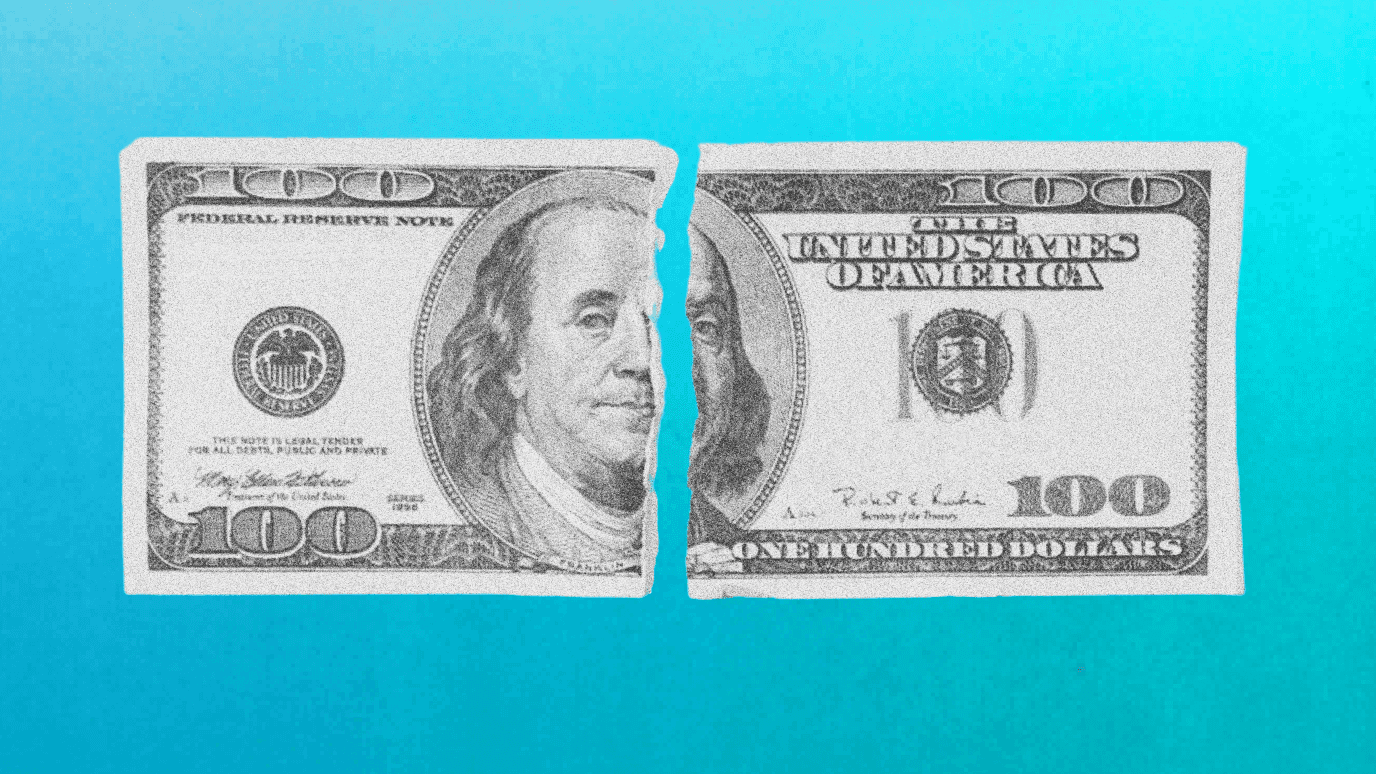
What is a stock split? A stock split is when a company divides each existing share into multiple new shares, lowering the price per share by the same proportion. Your share count changes, but the total value of your position does not change because of the split itself. If you are a shareholder in a company, a stock split is mostly a math update in your brokerage account, not a payday. |
|---|
A stock split can make a high-priced stock look more accessible. But it does not make the business more valuable overnight. That distinction matters. A split can be a useful signal that a company has grown enough for its share price to get high, but it is not a reason by itself to buy the stock.
Stash's view: do not chase a stock just because it split. Look at the company, your goals, your risk tolerance, and how the investment fits into a diversified portfolio. The split is the wrapper. The business is what you actually own.
How stock splits work
Stock prices are usually determined by supply and demand among buyers and sellers. In a stock split, a company increases the number of shares outstanding and reduces the price per share by a matching ratio.
The total market value does not change from the split alone.
Market capitalization, or market cap, is calculated like this:
Share price x shares outstanding = market cap
If the share price is cut in half and the number of shares doubles, the market cap stays the same at the moment of the split.
A simple stock split example
Say you own four shares of ABC Med at $400 per share.
Before 2-for-1 split | Value |
|---|---|
Shares owned | 4 |
Price per share | $400 |
Total position value | $1,600 |
ABC Med announces a 2-for-1 stock split. For every one share you own, you receive two shares. The share price is adjusted from $400 to $200.
After 2-for-1 split | Value |
|---|---|
Shares owned | 8 |
Price per share | $200 |
Total position value | $1,600 |
You own more shares, but each share represents a smaller slice of the same company. Your total value is still $1,600 before normal market movement.
A pizza analogy helps: if you cut one pizza into eight slices instead of four, you have more slices. You do not have more pizza.
Key stock split terms to know
Stock split announcements often include a few dates and phrases that can sound more complicated than they are.
Split ratio: The exchange rate for old shares to new shares, such as 2-for-1, 3-for-1, 10-for-1, or 20-for-1.
Record date: The date used to determine which shareholders are listed for the split.
Effective date: The date the split takes effect and your brokerage account typically reflects the new share count.
Ex-split date: The date the stock begins trading at its split-adjusted price.
Shares outstanding: The total number of company shares held by investors, insiders, and institutions.
Split-adjusted price: The historical share price restated to account for a split, so charts remain comparable.
In most cases, investors do not need to take action. Your brokerage handles the adjustment automatically.
Different types of stock splits
Stock splits can happen in several ratios. The economic idea is the same: share count and share price move in opposite directions.
2-for-1 stock split
In a 2-for-1 stock split, you receive two shares for every one share you owned before the split. Your share count doubles, and the share price is cut in half.
Example: 10 shares at $100 become 20 shares at $50. The total value remains $1,000 before market movement.
A company may choose a 2-for-1 split to increase liquidity, broaden participation, or keep the share price in a range that feels more approachable to investors.
3-for-1 stock split
In a 3-for-1 stock split, you receive three shares for every one share you owned. The share price is adjusted to one-third of its previous price.
Example: 5 shares at $300 become 15 shares at $100. The total value remains $1,500 before market movement.
Larger stock splits
Some companies use larger ratios when their stock price has climbed substantially. Alphabet, Google's parent company, completed a 20-for-1 stock split in 2022. Amazon completed a 20-for-1 split in 2022. Nvidia completed a 10-for-1 split in June 2024. Chipotle completed a 50-for-1 split in June 2024, one of the largest splits by a major U.S. public company in recent years.
Larger ratios can make the share price look dramatically lower. But the same rule applies: the split itself does not change the company's total value.
Reverse stock split
A reverse stock split works in the opposite direction. Instead of receiving more shares at a lower price, investors receive fewer shares at a higher price.
Example: In a 1-for-10 reverse split, 100 shares at $2 become 10 shares at $20. The total value is still $200 before market movement.
Companies often use reverse splits when their share price has fallen very low, sometimes to meet exchange listing requirements. A reverse split can make the stock price look healthier, but it does not fix weak revenue, heavy debt, or a struggling business model.
Why companies split their stock
Companies usually split their stock to make shares easier to trade, to keep the share price in a more common range, or to signal confidence after a period of price appreciation.
1. To make shares feel more accessible
A stock priced at $1,000 can feel out of reach, even if fractional shares are available. A 10-for-1 split would lower that price to $100 per share.
In 2026, fractional-share investing has changed the old affordability argument. You do not always need to buy a full share to invest in a company. Still, many companies split their stock because lower per-share prices can feel less intimidating and may attract more investors.
That is not a bad thing. Investing should not be reserved for people who can buy expensive single shares. But a lower share price is not the same as a bargain. A $50 stock can be expensive relative to the company's profits, and a $500 stock can be reasonably valued. Price is only one piece of the picture.
2. To improve liquidity
Liquidity refers to how quickly an investment can be bought or sold without a large effect on its price. More shares outstanding can make trading smoother, especially for heavily traded stocks.
Better liquidity can also narrow the bid-ask spread, which is the gap between the highest price a buyer is willing to pay and the lowest price a seller is willing to accept.
3. To make employee stock compensation easier to understand
Many public companies pay employees partly in stock or stock-based awards. A lower share price can make grants, vesting schedules, and employee ownership feel more tangible.
For example, receiving 20 shares may feel more concrete than receiving 0.4 shares, even if the dollar value is the same.
4. To send a market signal
A company may announce a stock split after its share price has risen meaningfully. Investors may see that as a sign of strength.
But signals are not facts. Some companies do well after splits. Others do not. The long-term performance still depends on earnings, cash flow, competition, leadership, valuation, and the broader market.
Famous stock split examples
Apple has split five times since going public in December 1980. Its most recent split was a 4-for-1 split in August 2020. Earlier Apple splits included a 7-for-1 split in 2014 and 2-for-1 splits in 2005, 2000, and 1987.
Amazon has split four times since 1998, most recently through a 20-for-1 split in June 2022.
More recent examples include Walmart's 3-for-1 split in February 2024, Nvidia's 10-for-1 split in June 2024, and Broadcom's 10-for-1 split in July 2024.
These examples can be useful, but they can also tempt investors to connect the wrong dots. The split did not create the business success. In many cases, the business success came first, and the split followed.
What stock splits mean for shareholders
If you already own a stock that splits, your brokerage account should update automatically. You will see a new share count and a new price per share.
What changes:
The number of shares you own
The price per share
Historical price charts, which are usually adjusted for the split
Per-share figures, such as earnings per share, on a split-adjusted basis
What does not change because of the split itself:
Your total ownership value at the moment of the split
The company's market cap
The company's revenue, profit, debt, or competitive position
Your percentage ownership of the company
Normal market movement can still change the stock price before, during, and after the split. If the stock rises after a split, that is because buyers are willing to pay more, not because the split mechanically added value.
What happens if you own fractional shares?
Fractional shares make stock splits a little more interesting, but the basic math stays the same.
If you own 0.5 shares of a company and it does a 4-for-1 split, you would generally end up with 2 shares. If you own 0.25 shares in a 10-for-1 split, you would generally end up with 2.5 shares.
Some splits or reverse splits can create tiny fractional amounts. Depending on the company, transfer agent, and brokerage, you may receive the fractional shares or receive cash instead. If cash is paid in place of a fractional share, that cash may have tax consequences.
Are stock splits taxable?
A standard forward stock split is generally not a taxable event for U.S. investors. You are not receiving new economic value. You are receiving more shares with an adjusted cost basis.
Your total cost basis usually stays the same, but it is spread across more shares.
Example: You bought 10 shares for $1,000 total. Your cost basis is $100 per share. After a 2-for-1 split, you own 20 shares. Your total cost basis is still $1,000, but your cost basis per share becomes $50.
You may owe taxes later if you sell shares for a gain. If you receive cash instead of a fractional share, that cash may be treated as a taxable sale. Tax rules can be specific, so consider checking with a tax professional for your situation.
What happens to options, orders, and dividends?
Stock splits can affect more than the share count in your portfolio.
Options: Listed stock options are typically adjusted by the Options Clearing Corporation so the contract reflects the split. The goal is to keep the contract's overall economic value consistent.
Limit orders and stop orders: Brokerages may adjust or cancel open orders around a split. Check your brokerage's rules if you have orders in place.
Dividends: If a company pays a dividend, the dividend per share is usually adjusted after the split. A $1 dividend before a 2-for-1 split would typically become $0.50 per share after the split, leaving the total dividend amount similar for the same ownership stake.
What is a stock split's impact on your investing strategy?
A stock split should not be the center of your investing strategy. It can make a stock easier to buy in whole-share amounts. It can increase attention. It can improve trading liquidity. But it does not replace research.
A stronger approach is to ask:
Does this company fit my long-term investing goals?
Am I comfortable with the risk?
Is my portfolio diversified, or am I concentrating too much in one stock?
Am I buying because I understand the investment, or because the split is getting attention?
Would I still want this investment if the split were not happening?
This is where Stash has a clear point of view: long-term investing beats hype chasing for most people. Stock splits can be exciting, but excitement is not a plan. Build your portfolio with a mix of investments, invest consistently when you can, and use guidance that helps you understand what you own.
Stash can help you learn how to start investing, understand risk and reward, and build your portfolio with more confidence from your phone.
FAQs about stock splits
Is a stock split good or bad?
A stock split is not automatically good or bad. It is usually neutral at the moment it happens because your total position value does not change. It may be a positive signal if the company split after strong performance, but the business fundamentals matter more than the split.
Do you make money when a stock splits?
You do not make money from the split itself. If you owned $1,000 of stock before the split, you should own about $1,000 right after the split, before market movement. You can make or lose money later if the stock price moves.
Can you lose money in a stock split?
The split itself does not create a loss, but the stock can fall before or after the split due to normal market trading. A lower post-split share price does not protect you from investment risk.
Should I buy before or after a stock split?
The split date alone should not drive the decision. Buying before the split gives you fewer higher-priced shares that become more lower-priced shares. Buying after the split gives you the split-adjusted price. The more important question is whether the investment fits your goals and portfolio.
What happens if I own one share before a 4-for-1 split?
You would generally own four shares after the split. If the stock was $200 before the split, it would be adjusted to about $50 per share after the split, before market movement.
What happens if I own fractional shares during a split?
Your fractional position is typically adjusted by the split ratio. For example, 0.5 shares in a 4-for-1 split would generally become 2 shares. In some cases, very small fractional amounts may be paid out in cash.
Are stock splits taxable?
Standard forward stock splits are generally not taxable for U.S. investors. Your total cost basis usually stays the same and is divided across the new number of shares. Cash received instead of a fractional share may be taxable.
What is the difference between a stock split and a stock dividend?
A stock split changes the number of shares and the price per share by a set ratio. A stock dividend pays shareholders additional shares instead of cash. Some companies describe a split as being paid in the form of a stock dividend, but for everyday investors the economic result can look very similar: more shares and a lower adjusted price per share.
Why would a company do a reverse stock split?
A company may do a reverse split to raise its share price, often because the price has fallen very low or the company needs to meet exchange listing rules. A reverse split does not make the company more valuable by itself and can be a warning sign if the business is under pressure.

Written by
Team Stash
We want to turn money into a source of hope and opportunity. We teach people how to build good habits, save more and make it easy and affordable to get started investing. So far, we’ve helped over 6 million people create a more secure financial future with our expert advice and award winning investing app.
Related articles

investing
Jun 25, 2026
Should You Buy IPOs? 4 Myths About Hot New Listings
investing
Jun 18, 2026
Best Index Funds for Beginners and How to Pick One
investing
Jun 10, 2026
What Is an Index Fund? A Complete Beginner's Guide
investing
Jun 09, 2026
How to Start Investing: A Beginner’s Guide for 2026

investing
Jun 04, 2026
What Is Quantum Computing? An Investor’s 2026 Guide
investing
Jun 03, 2026
What Is an IPO? How It Works for Everyday Investors

By using this website you agree to our Terms of Use and Privacy Policy. To begin investing on Stash, you must be approved from an account verification perspective and open a brokerage account.